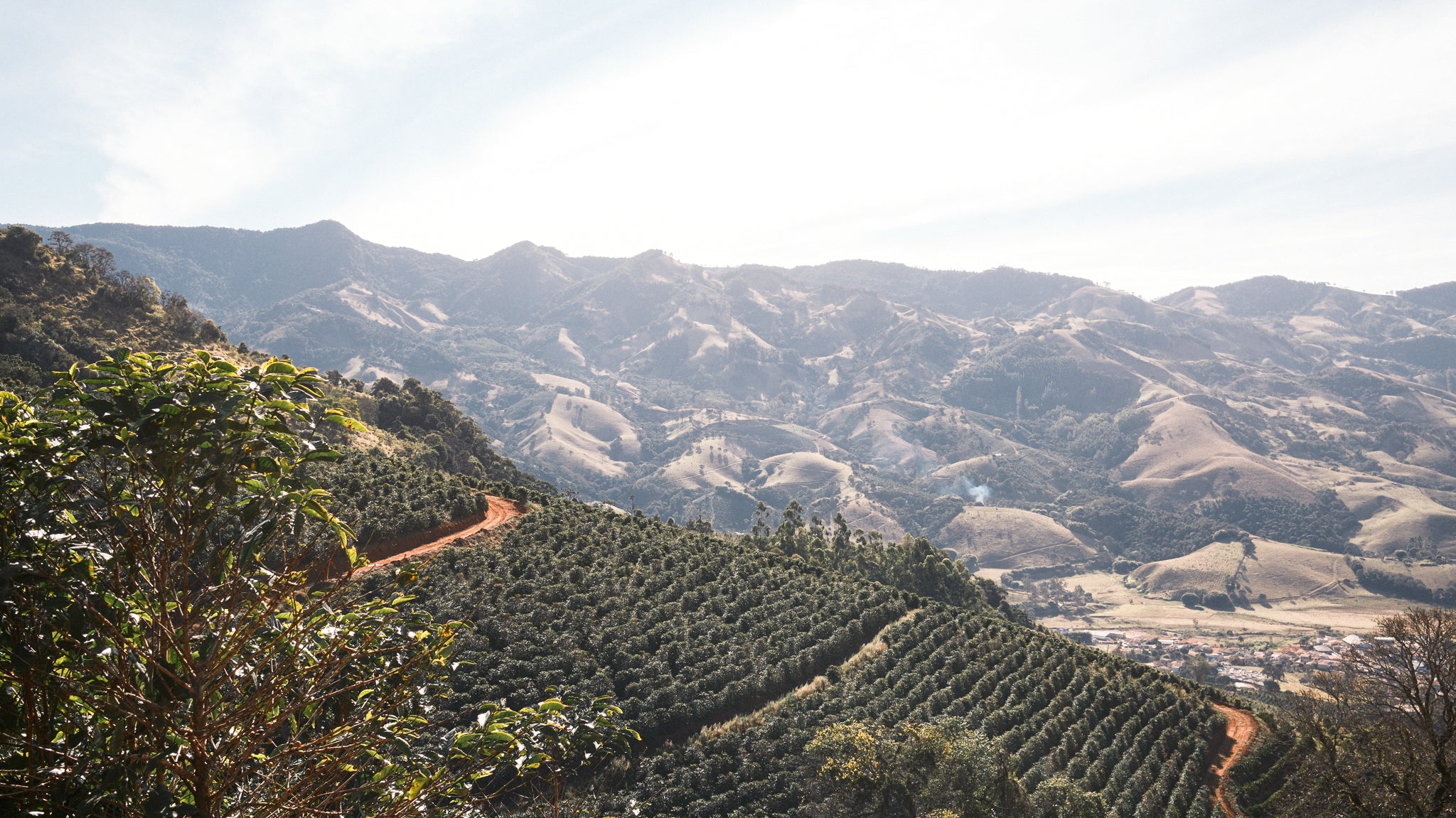
PRODUCER: Women members of the Cooperative Coffee Rusiga Sector (KCRS)
WASHING STATION: Kinini, Rulindo
PROCESS: Washed
VARIETIES: Bourbon Mayaguez & Bourbon Jackson
ALTITUDE: 1800 - 2500 MASL
NOTES: Marmalade, gooseberry, black tea, brown sugar
One of our favourite times of the year here at the roastery- our Rwandan lots from the Kinini washing station have landed!
This year we've purchased four coffees, processed four different ways, and thought it would be fun to present them as part of 'The Kinini Series'. Starting us off is the return of the washed lot, from the women's co-operative KCRS. We're tasting sweet orange peel, reminding us of marmalade, combining with a lovely gooseberry acidity. Lots of black tea florals and a tonne of brown sugar make this, as ever, a stand-out coffee in our year- clean, sweet and complex.
If we're honest, it's not even the incredible quality of this coffee that captures our imagination- it's the story. This coffee is produced by women farmers. There are some male members of the families but the women took over ownership and charge of the land. The support that a smallholder farmer relies on has been found to flourish under this structure, and it is often now used as a methodology to help improve the coffee on a farm if an individual is struggling.
Kinini Coffee was started by Jaqueline Turner. She first set up the charity A New Beginning in Rwanda in 2008. The charity helped a group of widows and orphans displaced during the genocide in 1994, who were resettled in an area of uncultivated savannah. Jacquie then started growing coffee in 2012 to provide a sustainable revenue stream for the charity. Within years they were producing some of the best coffee in Rwanda. 10% of funds Kinini receive for the sale of their coffee go to supporting a health centre and school.
FROM OUR IMPORTER - DRWakefield
85% of the growers that make up Cooperative Coffee Rusiga Sector (KCRS), have their farms above 2000masl. An incredibly diverse crop production happens on these smallholder plots, legumes, beans, sweet potatoes and more can be grown in between the coffee trees. This allows income to be spread over the year as well as producing food for their own consumption. Typically, you’ll find very small family plots cultivating an average of 6 crops. This coffee is produced by women farmers. There are some male members of the families but the women took over ownership and charge of the land. The support that a smallholder farmer often relies on has found to flourish under this structure and it is often now used as a methodology to help improve the coffee on a farm if an individual is struggling. We source the coffee through Kinini and Jacquie has been active in helping them to organise themselves since some of the women supplied coffee to them. As Jacquie herself says, “A few of them asked me for advice if I could help them form a cooperative and get training from us. We then made changes behind the scenes, got the paperwork in place after few days the cooperative was registered. They then made 12 groups depending on which village is near to them making training and travelling easy.”
To get the best from your coffee please take a look at our brew guides HERE
ALL PACKAGING IS CARBON NEUTRAL AND WIDELY RECYCLABLE